BMX Part
Cranks
Cranks are the two arms that connect the pedals to the bottom bracket spindle, turning a rider's leg power into rotation of the sprocket and chain.
Updated 3 min read700 words
Cranks are the two arms that connect the pedals to the bottom bracket. They turn leg power into rotation of the sprocket and chain. On a BMX they also have to survive grinds, hard landings and pedal strikes, so they are usually made from heat treated chromoly steel.
What it does
Each crank arm has a pedal thread at one end and a spindle fitting at the other. The spindle runs through the bottom bracket, which lets the whole assembly spin on bearings. The drive side arm (the right) carries the sprocket. The non-drive arm (the left) is simply there to give your other foot a place to push.
Because BMX riders jump, grind and land on their pedals, cranks take far more shock than on a road bike. A bent spindle or a cracked arm is a common failure on a cheap set.
Types and standards
Piece count
| Type | How it works | Pros | Cons |
|---|---|---|---|
| 3-piece | Two separate arms and a separate spindle. The arms clamp onto each end of the spindle. | Replace one part at a time. Easy to swap spindle size. | More bolts to check. Slightly heavier. |
| 2-piece | The spindle is part of one arm. The other arm fits on the free end. | Stiffer. Fewer joints to loosen. | If the spindle bends you replace the arm. |
| 1-piece | Both arms and the spindle are a single forging. | Cheap. | Heavy. Found on entry level bikes. Uses a 1/2 inch pedal thread. |
Spline count
The spline count is how the arm grips the spindle.
| Spline | Notes |
|---|---|
| 8-spline | An older, coarser interface. Fewer positions to set the arm angle. |
| 48-spline | The modern standard. Finer splines let you set the arm angle precisely and hold it under load. |
Spindle diameter
Most freestyle cranks use a 19mm or 22mm spindle. The 22mm spindle is thicker and stiffer. The 19mm spindle is lighter. Your bottom bracket bearings must match the spindle, so you cannot mix them freely.
Sizing and compatibility
Crank length is measured from the centre of the spindle to the centre of the pedal hole. Common lengths run from 160mm to 175mm.
- 160 to 165mm: Smaller riders. More ground clearance. Less leverage.
- 170mm: A common all-round choice.
- 175mm: Taller riders. More leverage for sprinting and getting speed into a ramp.
Check these before you buy:
- Spindle diameter: 19mm or 22mm, matching your bottom bracket.
- Spline type: 48-spline arms need 48-spline spindles (and the same goes for 8-spline).
- Sprocket mount: A bolt drive crank takes a sprocket that bolts to the arm. A spline drive crank takes a sprocket that slides onto the spindle.
- Pedal thread: Most adult cranks use 9/16 inch. See pedals.
- Chainline: The sprocket position should line up with the rear driver.
Materials: chromoly and heat treatment
Chromoly (chromium-molybdenum steel, often 4130) is the standard material. It is strong for its weight and can be forged or drawn into thin tubes. Better cranks are heat treated, a process that hardens the steel so it resists bending. Heat treated cranks usually cost more and are worth it for riders who grind or land hard.
Some budget cranks use plain high-tensile steel. Some lighter cranks use aluminium arms with a steel spindle. Aluminium arms can flex or crack under heavy street use.
How to choose
- Pick the spindle size first (19mm or 22mm) based on your bottom bracket.
- Choose 48-spline if you have the option.
- Choose 3-piece if you want to repair cheaply, or 2-piece if you want fewer loose parts.
- Match crank length to your height and riding style.
- Pick a bolt drive or spline drive to suit the sprocket you want.
Entry level cranks are a modest cost. Heat treated chromoly sets from known brands cost noticeably more, but they last far longer.
Maintenance
- Check the crank bolts after the first few rides, then monthly. A loose arm will damage the splines.
- Grease the spindle and pedal threads when you fit them.
- Replace any arm with cracks or a spindle that has a visible bend.
- If a crank creaks, check the bolts, the bottom bracket and the pedals before blaming the arms.
- See BMX maintenance basics for a general checklist.
Related parts
Bottom bracket, sprocket, pedals, chain, and BMX bike anatomy.
Frequently asked questions about Cranks
What crank length should I buy?
Most adult riders choose 170mm or 175mm. Shorter arms, around 160 to 165mm, suit smaller riders and give more ground clearance. If you are unsure, 170mm is a safe middle point.
Are 3-piece or 2-piece cranks better?
Neither is better in every way. Two-piece cranks are stiffer and have fewer parts to loosen. Three-piece cranks are cheaper to repair because you can replace one arm or the spindle on its own.
Will any cranks fit my bottom bracket?
No. The spindle diameter (19mm or 22mm) has to match the bottom bracket bearings. Check your frame and bottom bracket before you buy.
Watch on the LUXBMX YouTube
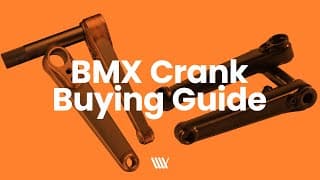
A video about Cranks from the LUXBMX YouTube channel.
Shop at LUXBMX
Popular picks for this article from LUXBMX, an Australian BMX store.
 Sunday Saker CranksView the Sunday Saker Cranks at LUXBMX
 Colony Venator CranksView the Colony Venator Cranks at LUXBMX
 Box Four CranksetView the Box Four Crankset at LUXBMX
Photos: LUXBMX
BMX Wiki and LUXBMX share an owner. Links to the store are not paid placements and do not change what articles say. About this relationship
Related articles
Bottom Bracket
A bottom bracket is the set of bearings in the frame's shell that lets the crank spindle spin, and its standard has to match both frame and cranks.
3 min readSprocket
A sprocket is the toothed ring on a BMX crank that drives the chain, and its tooth count sets the gear ratio when paired with the rear driver.
3 min readPedals
BMX pedals are the platforms that thread into the crank arms and give the rider's feet a grippy surface to push, jump and balance on.
3 min readChain
A BMX chain is the single-speed roller chain that links the sprocket to the rear driver, carrying pedalling force from the cranks to the back wheel.
3 min readHow to Build a BMX Bike from Parts
Build a BMX from parts by checking compatibility first, then fitting the headset, forks, bars, bottom bracket, cranks, wheels and chain in a set order.
5 min readBMX Bike Anatomy
A BMX bike is a single speed, 20 inch bike built from about 20 named parts: here is each one in order from the front wheel to the rear wheel.
3 min read