BMX Part
Pedals
BMX pedals are the platforms that thread into the crank arms and give the rider's feet a grippy surface to push, jump and balance on.
Updated 3 min read598 words
BMX pedals are the platforms that thread into the crank arms. They give your feet a grippy surface to push, jump and balance on. Most BMX riders use flat platform pedals with pins and no straps.
What it does
Pedals turn leg power into rotation of the cranks. They also hold your feet in place when you hop, grind or land. A good pedal has a wide, grippy platform and a spindle that spins smoothly.
Because BMX riders step off and on constantly, and land on their pedals, they are one of the parts that take the most abuse.
Types and standards
Plastic vs alloy
| Type | Pros | Cons |
|---|---|---|
| Plastic (nylon or polycarbonate) | Light and affordable. Softer on shins. Easy to replace. Often has fitted pins. | Can crack or flex under extreme load. Pins may wear. |
| Alloy (aluminium) | Strong and stiff. Takes hard hits. | Heavier. Edges can cut skin. Usually costs more. |
Why plastic took over freestyle
Plastic pedals became the norm on many freestyle bikes for practical reasons. They are cheap to replace, which suits riders who destroy pedals. They are lighter. They are much less painful when a foot slips and the pedal swings into a shin. Modern composite plastics are also stronger than older ones, so they last well under normal riding.
Plenty of riders still choose alloy for the stiffness and feel, so it is a matter of preference.
Thread size
| Thread | Used on |
|---|---|
| 9/16 inch | 3-piece and 2-piece cranks. Most adult and freestyle bikes. |
| 1/2 inch | One-piece cranks. Kids bikes and cheap bikes. |
The two sizes are not compatible. Forcing the wrong thread can strip the crank arm.
Pins
Pins give extra grip and are usually screwed into the platform. Alloy pedals typically use replaceable steel pins. Many plastic pedals have pins fitted, and some have moulded grip. Longer pins grip better but bite when you slip. Shorter pins are more forgiving. Bent or lost pins can be replaced if the pedal supports it.
Sealed vs unsealed
| Bearing | Notes |
|---|---|
| Sealed | The bearings have seals that keep dirt and water out. They last longer with less care and spin smoothly. |
| Unsealed | The bearings or bushings are open. They are cheaper and easy to service, but need more frequent cleaning and greasing. |
Sizing and compatibility
- Thread: 9/16 inch or 1/2 inch. Match your cranks.
- Left and right: the left pedal has a reverse thread. Do not swap sides.
- Platform size: wider platforms give more control. Bigger feet and shoes want bigger platforms.
- Spindle length: a longer spindle pushes the pedal further from the crank. Make sure it does not hit the frame or chainstay.
- Shoe fit: flat soled shoes grip best on pins.
How to choose
- Decide on plastic or alloy. If you are not sure, start with plastic.
- Match the thread to your cranks.
- Pick a platform size that suits your shoe size.
- Check pin style. Shorter pins hurt less if you are learning.
- Look for sealed bearings if you ride in wet or dusty places.
Pedals range from low to moderate prices. Alloy pedals with replaceable pins and sealed bearings cost more. Beginners do not need the most expensive pair.
Maintenance
- Grease the thread before fitting. Do not overtighten, because it can strip the crank.
- Tighten the pedals after the first few rides.
- Check pins and replace any that are bent or missing.
- Spin the pedal. If it is rough or loose, the bearings need attention.
- Wipe dirt away and re-grease unsealed pedals regularly.
- See BMX maintenance basics and how to set up a new BMX.
Related parts
Cranks, bottom bracket, sprocket and pegs.
Frequently asked questions about Pedals
Should I choose plastic or alloy pedals?
Plastic pedals are cheaper, lighter, gentler on shins and easy to replace. Alloy pedals are stiffer and last longer on hard use, but they weigh more and hit harder when your foot slips.
Which thread size do I need?
Most adult BMX cranks (3-piece and 2-piece) use 9/16 inch. Cheap one-piece cranks and kids bikes use 1/2 inch. Check your cranks before buying.
Which pedal goes on which side?
The right pedal tightens clockwise and the left tightens anticlockwise. Pedals are usually marked L and R on the spindle.
Watch on the LUXBMX YouTube
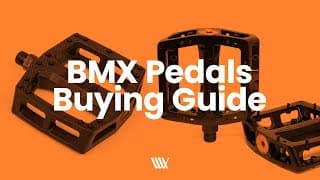
A video about Pedals from the LUXBMX YouTube channel.
Shop at LUXBMX
Popular picks for this article from LUXBMX, an Australian BMX store.
 Odyssey Twisted PC PedalsView the Odyssey Twisted PC Pedals at LUXBMX
 Odyssey Twisted PC Pro PedalsView the Odyssey Twisted PC Pro Pedals at LUXBMX
 Colony Fantastic Plastic PedalsView the Colony Fantastic Plastic Pedals at LUXBMX
Photos: LUXBMX
BMX Wiki and LUXBMX share an owner. Links to the store are not paid placements and do not change what articles say. About this relationship
Tags:drivetrainpedalsgrip
Related articles
Cranks
Cranks are the two arms that connect the pedals to the bottom bracket spindle, turning a rider's leg power into rotation of the sprocket and chain.
3 min readBottom Bracket
A bottom bracket is the set of bearings in the frame's shell that lets the crank spindle spin, and its standard has to match both frame and cranks.
3 min readSprocket
A sprocket is the toothed ring on a BMX crank that drives the chain, and its tooth count sets the gear ratio when paired with the rear driver.
3 min readBMX Maintenance Basics
Check your bolts, chain, tyres, headset and cranks weekly, and give the whole bike a deeper service monthly, to keep a BMX safe and quiet.
3 min readHow to Set Up a New BMX
Unbox your complete BMX, align the bars, fit the pedals on the correct sides, set the brake and seat, and torque every bolt before the first ride.
4 min readBearings
Bearings are the rings of steel balls that let a BMX bike's wheels, cranks, steering and pedals turn smoothly, built as sealed cartridges or as loose balls.
4 min read