BMX Part
Protective Gear
BMX protective gear is the equipment riders wear to reduce injury, including helmets, knee and shin pads, gloves, shoes and mouthguards, chosen by discipline.
Updated 5 min read1,019 words
BMX protective gear is the equipment riders wear to reduce the chance and severity of injury. It includes a helmet, knee pads, shin guards, elbow pads, gloves, riding shoes and a mouthguard. What riders wear depends on the discipline: racers wear a full set by rule, while many street riders wear only a helmet and sometimes shin guards.
What it does
Falls are part of learning BMX. Protective gear spreads and absorbs the force of a crash, stops skin from scraping on concrete, and keeps pedal pins and metal parts from cutting into shins and hands. Good gear also builds confidence, which helps riders commit to a trick instead of bailing halfway through.
Gear does not make a rider safe on its own. Riding within your limits, checking the bike and learning to fall still matter more.
Types and standards
Helmets
The helmet is the most important piece of gear. BMX riders use open-face (skate style) helmets for street and park, and full-face helmets for racing, dirt and some park riding. For types, sizing, certification and fit, see the BMX helmet guide.
Bicycle helmets are compulsory when riding in public in all Australian states and territories. The Northern Territory is the main exception: riders over 17 do not need one on footpaths, shared paths and separated bike paths, but must wear one on the road. Some states also allow medical or religious exemptions. Many skateparks, tracks and clubs require helmets regardless. Check the current rules where you ride, since details and penalties differ between states and change over time.
Pads and guards
| Gear | What it protects | Notes |
|---|---|---|
| Knee pads | Knees in falls and slams | Hard-cap pads slide on ramps. Soft pads are lighter and more comfortable. |
| Shin guards | Shins from pedal pins and the frame | Often combined with knee pads. Very common for beginners. |
| Elbow pads | Elbows in side falls | More common in park, vert and racing. |
| Padded shorts | Hips and tailbone | Worn under shorts or trousers, mainly in park and vert. |
| Wrist guards | Wrists | Rare in BMX, since they can get in the way of grip. |
Gloves
Gloves protect palms in a fall and improve grip when hands sweat. Full-finger gloves are standard in racing and dirt. Many street and park riders ride bare-handed, but gloves are cheap protection, especially for beginners.
Shoes
Flat-soled shoes give the best grip on flat pedals. Gum rubber soles hold well on pins. A shoe that is too thin lets pins dig into the foot, and one that is too thick loses feel. Racers on clipless pedals use shoes made to suit them. See pedals.
Mouthguards
A mouthguard protects teeth and can reduce injuries in face-first crashes. Boil-and-bite guards are cheap and widely available. Custom guards fitted by a dentist are more comfortable and protect better.
Racing requirements
UCI rules, which AusCycling follows, require a full-face helmet, full-finger gloves and a long-sleeved jersey. Riders can wear long pants, or shorts with guards that cover the whole knee and shin down to the ankle. AusCycling's Mini Wheeler class for the youngest riders allows a standard bicycle helmet with long sleeves, long pants, covered shoes and full-finger gloves. The USA BMX rulebook is looser: a helmet and enclosed shoes are required, while a full-face helmet, long sleeves and long pants are recommended, and shorts with knee and shin pads or short sleeves with elbow pads can be approved. Rules are updated each year, so check the current rulebook for your club and level.
Sizing and compatibility
- Knee and shin guards. Sized by leg measurement or by height, depending on the brand. The pad should cover the joint and stay put when you bend your knee.
- Elbow pads. Sized by arm circumference. They should not slide down when you straighten your arm.
- Gloves. Sized by hand width or length. They should be snug without being tight across the knuckles.
- Shoes. Normal shoe size, with a sole that suits your pedals.
- Mouthguards. Boil-and-bite guards come in a few sizes. Custom guards are moulded to your teeth.
- Fit with clothing. Low-profile pads fit under jeans or trousers. Bulky hard-cap pads usually go over the top.
Try gear on before buying if you can. Pads that slip in a crash do not protect.
Materials
- Impact foam. EVA and similar foams absorb hits in soft pads.
- Impact-hardening foam. Some pads use foams that stay soft until hit, then stiffen. Comfortable and protective, but more expensive.
- Hard plastic caps. Slide on ramp surfaces and spread a point impact.
- Neoprene and knit sleeves. Hold pads in place. Breathable sleeves are cooler in Australian summer heat.
- Leather and synthetics. Used in gloves and shoes for grip and wear.
How to choose
| Discipline | Common setup |
|---|---|
| Street | Helmet, often shin guards. Some riders add knee pads. |
| Park | Helmet, knee pads, shin guards. Elbow pads for bigger ramps. |
| Dirt and trails | Helmet (often full-face), gloves, knee and shin pads |
| Vert | Helmet, hard-cap knee pads, elbow pads, often padded shorts |
| Racing | Full-face helmet, gloves, long sleeves and long pants (or shorts with full knee and shin guards), as the rules require |
| Flatland | Often shin guards and gloves. Helmets are less common but still sensible. |
- Start with a well-fitting, certified helmet.
- Add knee and shin pads, especially while learning. See how to start riding BMX.
- Add gloves for dirt, racing or if you ride on rough surfaces.
- Pick shoes with flat, grippy soles.
- Add elbow pads, padded shorts or a mouthguard as you ride bigger ramps or jumps.
Keep the bike safe too. Fitted bar ends and sound pedals reduce injuries in a crash.
Maintenance
- Wash soft pads and gloves regularly and let them dry fully. Sweat breaks down foam and straps.
- Check straps and Velcro. Replace pads that no longer stay in place.
- Replace hard caps, pads or gloves that are worn through or cracked.
- Replace a helmet after any significant impact, or as the maker recommends, even if it looks fine.
- Rinse mouthguards after use and store them in a ventilated case.
- Replace shoes when the soles wear smooth and lose grip on the pins.
Related parts
Pedals, bar ends and the BMX helmet guide.
Frequently asked questions about Protective Gear
Do I have to wear a helmet to ride BMX in Australia?
Yes, in public places. Bicycle helmets are compulsory in all Australian states and territories. The Northern Territory lets riders over 17 go without one on footpaths and shared paths, though not on roads, and some states allow medical or religious exemptions. Skateparks and tracks often set their own rules, so check the current rules where you ride.
What pads should a beginner wear?
A helmet first, then knee pads and shin guards. Shins take the most knocks from pedals when you are learning. Gloves are a cheap extra that saves your palms in a fall.
Do BMX riders really need a mouthguard?
It is optional for most riding, but a mouthguard protects teeth in face-first crashes and is sensible for park, dirt and racing. A dentist-fitted guard fits best.
When should I replace my pads?
When the foam has gone flat, the hard caps are cracked or worn through, or the straps no longer hold the pad in place. Replace a helmet after any significant impact.
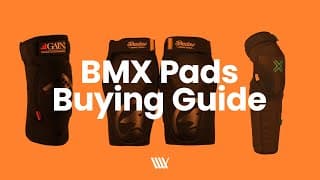
Watch on the LUXBMX YouTube
A video about Protective Gear from the LUXBMX YouTube channel.
Shop at LUXBMX
Popular picks for this article from LUXBMX, an Australian BMX store.
 Fuse Alpha Knee PadView the Fuse Alpha Knee Pad at LUXBMX
 Fuse Alpha Whip Shin Ankle Combo Pads (Pair)View the Fuse Alpha Whip Shin Ankle Combo Pads (Pair) at LUXBMX
 LUXBMX X FIST GlovesView the LUXBMX X FIST Gloves at LUXBMX
Photos: LUXBMX
BMX Wiki and LUXBMX share an owner. Links to the store are not paid placements and do not change what articles say. About this relationship
Related articles
BMX Helmet Guide
A BMX helmet should be certified to a bicycle standard such as AS/NZS 2063, CPSC or EN 1078, fit snugly and level, and be replaced after any significant crash.
5 min readHow to Start Riding BMX
Learn BMX in order: ride in a good stance, pump, bunny hop, manual and drop in, practising at a skatepark with good etiquette and protective gear.
4 min readPedals
BMX pedals are the platforms that thread into the crank arms and give the rider's feet a grippy surface to push, jump and balance on.
3 min readBar Ends
Bar ends are the plugs that close off the open ends of BMX handlebars, covering the sharp tube edge, holding grips in place and protecting the bars in a crash.
4 min readRacing
BMX racing is a sprint for up to eight riders on a dirt track with a start gate, jumps and berms, governed by the UCI and an Olympic sport since 2008.
5 min readPark
Park BMX is the discipline of riding skateparks, linking airs and tricks across ramps, bowls and box jumps, and is the format used in most major contests.
4 min read