BMX Part
Stem
A BMX stem is the clamp that joins the handlebars to the fork steerer, with its reach and height setting where the bars sit.
Updated 3 min read619 words
A BMX stem is the metal clamp that holds the handlebars to the top of the fork steerer. Its length and shape set how far forward and how high the bars sit, and so how the front end feels.
What it does
The stem has two jobs: it connects the bars to the fork, and it sets the position of the bars relative to the frame. Moving the bars even 5 mm changes how much room you have and how the steering feels.
Reach
Reach is the horizontal distance from the steerer centre to the bar centre. Typical BMX stems run about 48 to 55 mm. A shorter stem makes the bike feel tighter and more upright. A longer stem gives more room and steadier steering.
Stack height
Stack is how tall the stem body is. Taller stems raise the bars. Shorter stems keep them lower. You can also raise the bars by adding headset spacers, but extra spacers add flex and should be limited.
Types and standards
| Type | How it works | Pros | Cons |
|---|---|---|---|
| Top load | The bars slide in from the top and a plate bolts down over them | Strong, simple, the usual BMX style | You must remove the grips or the plate to swap bars |
| Front load | A faceplate on the front opens for bar changes | Easy bar swaps | The faceplate and bolts add parts that can loosen |
Both types have a lower clamp that fits the 1 1/8 inch (28.6 mm) fork steerer. The bar clamp is 22.2 mm on most stems. Some stems take 25.4 mm oversized bars, so check before buying.
Materials
Aluminium is the common choice. It is light and strong enough for BMX. Chromoly and steel stems exist and are very tough, but heavier.
Sizing and compatibility
- Steerer. 1 1/8 inch (28.6 mm) is standard for BMX forks.
- Bar clamp. Match your handlebar clamp: 22.2 mm or 25.4 mm.
- Reach. Pick by body size and style. See the frame geometry article for how top tube length interacts.
- Stack and spacers. Cut the steerer a few millimetres below the top of the stem, so the top cap can press down on the stem.
- Bolt thread. Most BMX stems use M6 bolts. Use the correct size hex key.
How to choose
- Decide the clamp sizes: 22.2 mm bar and 1 1/8 inch steerer are most common.
- Pick top load for simplicity and strength. Pick front load if you swap bars often.
- Choose a reach. If your bike feels cramped, go slightly longer. If it feels stretched, go shorter.
- Consider weight only after strength and fit. A heavier stem that does not crack is better than a light one that does.
- Check that the finish and bolts are good quality. Soft bolts round off easily.
Maintenance
- Torque. Over-tightening can crack the stem or crush the bars. Under-tightening lets the bars slip. Use a torque wrench and the figure marked on the stem. Many BMX stems list around 10 to 14 Nm, but always follow the maker.
- Cross pattern. Tighten bolts evenly in a cross pattern, a little at a time.
- Grease. A thin layer of grease on the bolt threads helps stop seizing. Keep it off the bar clamp surfaces unless the maker says otherwise.
- Check after crashes. Look for cracks near the bolts and clamp edges.
- Alignment. Line up the stem with the front wheel, then tighten the steerer bolts last. See the headset article for the correct preload order.
Related parts
- Handlebars: clamp into the stem.
- Forks: the stem clamps to the steerer.
- Headset: the top cap and preload sit under the stem.
- Grips: sit on the bars at the ends.
- Frame geometry: top tube length decides how much stem reach you need.
Frequently asked questions about Stem
Top load or front load?
Top load stems are the BMX default and use a strong one-piece clamp on the bar. Front load stems open from the front, so you can change bars without removing the grips. Both work well. Pick on how often you change bars.
What reach should I pick?
Around 50 to 53 mm suits most riders. Go shorter for a tighter, more upright feel. Go longer if you want more room or steadier steering.
How tight should the bolts be?
Follow the torque marked on the stem or in its manual. Many BMX stems list around 10 to 14 Nm. Tighten each bolt a little at a time in a cross pattern.
Watch on the LUXBMX YouTube
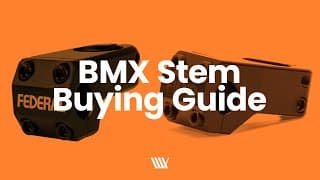
A video about Stem from the LUXBMX YouTube channel.
Shop at LUXBMX
Popular picks for this article from LUXBMX, an Australian BMX store.
 Sunday Freeze T/L Stem (22.2mm Clamp)View the Sunday Freeze T/L Stem (22.2mm Clamp) at LUXBMX
 Profile Push Stem (22.2mm Clamp)View the Profile Push Stem (22.2mm Clamp) at LUXBMX
 Colony Squareback Stem (22.2mm Clamp)View the Colony Squareback Stem (22.2mm Clamp) at LUXBMX
Photos: LUXBMX
BMX Wiki and LUXBMX share an owner. Links to the store are not paid placements and do not change what articles say. About this relationship
Related articles
Handlebars
BMX handlebars are the tall, swept chromoly bars that steer the bike and take the rider's weight, defined by their rise, width, sweep and clamp diameter.
4 min readForks
A BMX fork holds the front wheel and steers the bike, with offset, steerer size and dropout width setting how it fits and handles.
3 min readHeadset
A BMX headset is the bearing set inside the head tube that lets the fork and handlebars turn smoothly, and most modern bikes use an integrated 45 x 45 design.
3 min readGrips
BMX grips are the rubber or foam sleeves on the handlebar ends that give the rider's hands traction, cushioning and a place to hold on.
3 min readFrame Geometry
Frame geometry is the set of measurements, such as top tube length, head tube angle and chainstay length, that decides how a BMX frame fits and rides.
4 min readBar Ends
Bar ends are the plugs that close off the open ends of BMX handlebars, covering the sharp tube edge, holding grips in place and protecting the bars in a crash.
4 min read