BMX Part
Frame Geometry
Frame geometry is the set of measurements, such as top tube length, head tube angle and chainstay length, that decides how a BMX frame fits and rides.
Updated 4 min read890 words
Frame geometry is the set of angles and lengths that define the shape of a BMX frame. The main numbers are top tube length, head tube angle, chainstay length, bottom bracket height and standover. Together they decide how the bike fits the rider and how it behaves in the air, on a ledge and in a manual.
What it does
Geometry sets the balance point of the bike. A small change in one number shifts how weight sits over the wheels, how fast the bars turn and how the bike feels when you lean on it. Because BMX frames are small and similar, riders notice a 0.25 inch change more than they would on a road bike.
The key numbers
- Top tube length (TT). Measured from the centre of the head tube to the centre of the seat tube, horizontally. It is the main sizing number. A longer top tube gives more room and a calmer feel at speed. A shorter one feels tighter and easier to throw around.
- Head tube angle (HTA). The angle of the head tube against the ground. Slacker (lower) angles steer more slowly and feel steady. Steeper (higher) angles steer faster and feel twitchy.
- Chainstay length (CS). The distance from the bottom bracket to the rear axle. Shorter stays pull the rear wheel closer, which makes manuals and spins easier. Longer stays add stability and tyre room.
- Bottom bracket height (BB). How high the cranks sit above the ground. A higher BB gives more clearance for pegs and pedals on ledges and ramps. A lower BB feels lower and more planted. See bottom bracket for the shell itself.
- Standover. The height of the top tube above the ground where you straddle it. On BMX it is almost always low, so it rarely limits sizing.
- Seat tube angle. Usually steep and not a big factor on freestyle bikes, since many riders run the seat low.
Types and standards
There is no formal standard, only common ranges. The table below shows typical figures. Treat them as approximate, because makers vary and many frames offer several sizes.
| Use | Top tube (inch) | Head tube angle | Chainstay (inch) | BB height (inch) |
|---|---|---|---|---|
| Street | 20 to 21.25 | 74.5 to 75.5 | 13 to 13.75 | about 11.5 to 11.75 |
| Park | 20.5 to 21.25 | 74.5 to 75.5 | 13.25 to 14 | about 11.5 to 11.75 |
| Dirt jumping | 20.75 to 21.5 | 74 to 75 | 13.75 to 14.5 | about 11.75 to 12 |
| Race | Varies by size class (about 21 to 21.5 for Pro XL) | about 73.5 to 74.5 | about 14 to 15 (often adjustable) | about 11.5 to 12 |
Street frames are short and tight for tricks. Park frames are similar but often slightly longer for stability on larger ramps. Dirt frames run longer stays and a bit more length for steadiness on landings. Race frames are built for speed and straight-line handling, so they use slightly slacker head angles (around 74 degrees) and longer stays, and they are sized by class from mini up to pro XXL.
Sizing and compatibility
Top tube length is the number to start with. Rough guides for freestyle riders:
- Under about 165 cm (5 ft 5 in): 19.5 to 20.5 inch.
- About 165 to 178 cm: 20.5 to 21 inch.
- Over about 178 cm: 21 to 21.5 inch.
These are starting points, not rules. Arm length, riding style and personal taste all count. Read the full sizing guide for more detail.
Geometry also affects what parts fit well. A frame with a high BB and a short chainstay works with a longer stem or taller bars to balance the cockpit. The fork offset changes steering feel alongside the head tube angle. Tyre clearance depends on chainstay length and the frame's design, so check it before fitting a wide tyre.
Many frames use sliding or horizontal dropouts. These let you move the rear wheel back and forth, which changes the effective chainstay length. One setup can then feel short and snappy, and another long and stable.
How to choose
- Decide the main discipline. Street and park riders usually want shorter stays. Dirt and race riders usually want more length.
- Choose a top tube by height and feel. If you are between sizes, a rider who likes stability goes up, and one who likes a tight bike goes down.
- Check the chainstay range. If the dropouts adjust, you can tune the bike after you buy it.
- Do not chase tiny differences. A 0.25 inch change in top tube is easy to cover with a different stem or bar rise.
- If you can, sit on a bike or try a friend's before buying.
Maintenance
Geometry does not wear out, but frames can. Check these now and then:
- Look for cracks at the head tube, bottom bracket and dropouts. Stop riding if you find one.
- Keep the dropouts clean, and check the axle bolts are tight so the wheel does not shift and change your effective chainstay.
- If the frame was bent in a crash, the geometry has changed. Replace it rather than trying to straighten it.
Related parts
- Forks: offset and axle-to-crown height interact with head tube angle.
- Handlebars and stem: tune the front end to match the frame.
- Bottom bracket and cranks: set by the frame's BB shell and height.
- Headset: fits into the head tube.
- BMX bike anatomy: how all the parts fit together.
Frequently asked questions about Frame Geometry
What top tube length should I buy?
Most adult riders land between 20.5 and 21 inch. Pick by your height and how stretched out you like to feel, then use the bars and stem to fine tune. See the sizing guide for height ranges.
Does head tube angle matter for freestyle BMX?
Yes, but only slightly. Nearly every freestyle frame sits within about one degree of 75, so the differences are small. A slacker angle feels steadier at speed. A steeper angle feels quicker and lighter.
Are shorter chainstays better?
Short chainstays make it easier to lift the front wheel for manuals and to spin the bike. Longer chainstays feel more stable and give more room for a bigger tyre. Many frames let you slide the rear wheel to choose.
Watch on the LUXBMX YouTube
A video about Frame Geometry from the LUXBMX YouTube channel.
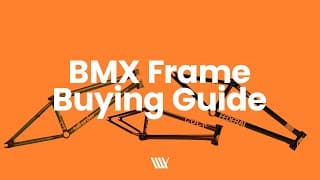
Shop at LUXBMX
Popular picks for this article from LUXBMX, an Australian BMX store.
 Kink Williams (Nathan Williams Signature) FrameView the Kink Williams (Nathan Williams Signature) Frame at LUXBMX
 Fiend Mills FrameView the Fiend Mills Frame at LUXBMX
 S&M M.O.D FrameView the S&M M.O.D Frame at LUXBMX
Photos: LUXBMX
BMX Wiki and LUXBMX share an owner. Links to the store are not paid placements and do not change what articles say. About this relationship
Related articles
What Size BMX Bike Do I Need?
Most teens and adults fit a 20 inch wheel BMX with a 20 to 21 inch top tube, chosen by height first and then adjusted for arm length and riding style.
4 min readBMX Bike Anatomy
A BMX bike is a single speed, 20 inch bike built from about 20 named parts: here is each one in order from the front wheel to the rear wheel.
3 min readForks
A BMX fork holds the front wheel and steers the bike, with offset, steerer size and dropout width setting how it fits and handles.
3 min readHandlebars
BMX handlebars are the tall, swept chromoly bars that steer the bike and take the rider's weight, defined by their rise, width, sweep and clamp diameter.
4 min readBottom Bracket
A bottom bracket is the set of bearings in the frame's shell that lets the crank spindle spin, and its standard has to match both frame and cranks.
3 min readChain
A BMX chain is the single-speed roller chain that links the sprocket to the rear driver, carrying pedalling force from the cranks to the back wheel.
3 min read